





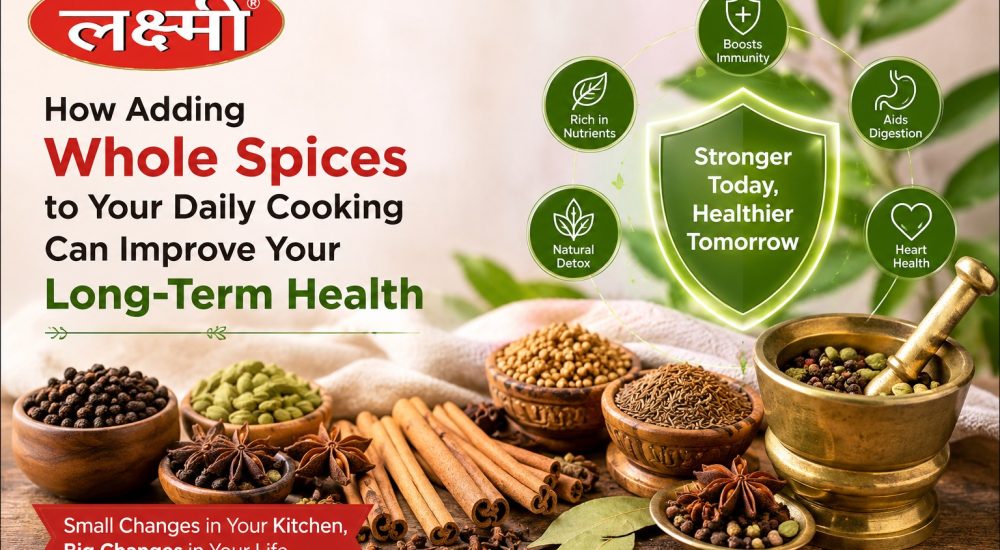

Somewhere between the tadka sizzle in your grandmother’s kitchen and the science of modern nutrition lies an ancient truth: the spices you cook with every day are doing far more than seasoning your food. They are quietly working to protect your body, calm your gut, and fortify your immunity meal after meal, for a lifetime.
India has understood this for thousands of years. Ayurvedic tradition has long recognised whole spices not merely as flavour agents but as therapeutic ingredients with measurable effects on the body. What Ayurveda described in holistic terms, modern nutritional research is now confirming with data and the results are remarkable.
In this guide, we explore exactly why incorporating indian whole spices into your everyday cooking is one of the most accessible, affordable, and delicious long-term health decisions you can make.
What Makes Whole Spices Different From Powders?
Before we explore health benefits, it is worth understanding the fundamental difference between whole spices and their ground counterparts. When a spice is ground, it begins losing its essential oils the compounds responsible for both its aroma and many of its therapeutic properties. Whole spices, by contrast, retain these oils within their intact cellular structure until the moment of heat application or grinding.
This is why sabut masala (whole spice) used in tempering tossed into hot oil at the start of cooking releases a bloom of fragrance that pre-ground powder simply cannot replicate. That bloom is also the moment of maximum phytochemical activation. In nutritional terms, whole spices tend to deliver more bioactive compounds per gram than their powdered equivalents because oxidation has had less opportunity to degrade them.
Key insight: The volatile compounds in whole spices like cinnamaldehyde in cinnamon sticks, eugenol in cloves, and piperine in black peppercorns are significantly more concentrated and stable in intact form than after grinding and storage. This means the spices you temper whole are genuinely more potent.
The 7 Powerhouse Indian Whole Spices Their Health Benefits
Here is a closer look at the everyday whole spices found in virtually every Indian kitchen and what the science says they are actually doing for your health.
Black Pepper (Kali Mirch)
Contains piperine, which boosts the bioavailability of nutrients including curcumin from turmeric by up to 2000%. Also supports digestive enzyme secretion.
Cloves (Laung)
Among the richest natural sources of antioxidants. Eugenol the primary compound in cloves has well-documented anti-inflammatory and antimicrobial properties.
Cinnamon (Dalchini)
Research consistently links dalchini to improved insulin sensitivity and blood sugar regulation. Particularly valuable for those managing metabolic health long term.
Cardamom (Elaichi)
Supports heart health by helping regulate blood pressure. The volatile oils in elaichi also promote digestive motility and are a natural breath freshener.
Carom Seeds (Ajwain)
Traditionally used to relieve bloating, acidity, and indigestion. Thymol ajwain’s key compound has demonstrated antibacterial action in the digestive tract.
Bay Leaves (Tej Patta)
Rich in vitamins A, C, and B6. Regular use in slow-cooked dishes contributes folate, zinc, and compounds that may support stable blood glucose levels.
Star Anise (Chakri Phool)
A natural source of shikimic acid a compound used pharmaceutically in antiviral formulations. Also supports immune function and respiratory health.
How Daily Tempering Works as a Health Practice
In Indian cooking, the tadka or chaunk the process of briefly frying whole spices in oil or ghee before adding other ingredients is the foundational technique for extracting both flavour and medicinal properties from spices. When spices like cumin, mustard seeds, or black pepper hit hot fat, the lipid-soluble compounds are drawn out and distributed evenly through the dish.
This is not coincidental. Traditional Indian culinary wisdom recognised that fat acts as a carrier for many spice compounds, improving their absorption in the body. Modern nutritional science confirms that several phytochemicals in spices are fat-soluble, meaning they are absorbed significantly better when consumed with dietary fat. Your tadka is, in effect, a bioavailability-optimising technique.

What this means practically is that even small amounts of indian whole spices used consistently in daily cooking a few peppercorns here, two cloves there, a small stick of cinnamon in a dal accumulate into a meaningful cumulative health benefit over months and years.
The Whole Spices Mix Tradition and Why It Matters
Across India’s regional kitchens, every cuisine has its own version of a foundational spice blend — a whole spices mix that goes into the pot at the beginning of cooking. In North Indian cooking, this might be a combination of bay leaf, black cardamom, cloves, cinnamon, and peppercorns. In South Indian cooking, it might include dried red chilli, mustard seeds, curry leaves, and urad dal. In Bengali cooking, the iconic panch phoron brings together five seeds with five distinct health properties.
These blends were not developed randomly. Generations of home cooks, guided by Ayurvedic wisdom and practical experience, assembled spice combinations that worked synergistically where the properties of one spice enhanced the benefits of another. Piperine from black pepper, for instance, amplifies the anti-inflammatory action of curcumin. Cloves and cinnamon used together create a stronger antioxidant effect than either alone.
Using a well-sourced, pure whole spices mix at home is therefore both a time-saving convenience and a nutritional strategy. The key caveat is freshness and purity a whole spices mix made from improperly dried or old spices loses much of its potency before it ever reaches your pan.
Why Sourcing Matters: Purity Is Everything
The health benefits of whole spices are only as real as the purity of the spices themselves. India’s spice market has a well-documented adulteration problem — a 2023 Food Safety and Standards Authority of India (FSSAI) report found contamination in a significant share of tested samples, ranging from added starch and artificial colour to foreign seeds mixed into whole spices to increase volume.
Adulterated spices do not just fail to deliver health benefits they can actively introduce harmful compounds into your food. This is why, when choosing a best masale company in india, the criteria go beyond price and packaging. You are looking for direct sourcing from spice-growing regions, minimal processing, and a brand with genuine accountability.
At Laxmi Masale, every whole spice in the range from kali mirch to ajwain to laung is sourced directly from established growing regions, processed without artificial additives, and packed fresh to preserve the essential oils that make whole spices both aromatic and therapeutic. What you receive is spice that still smells, cooks, and performs the way whole spices are supposed to.
Bring Real Whole Spices Into Your Kitchen
Laxmi Masale’s Whole Spice range is sourced directly from India’s finest growing regions pure, fresh, and packed to preserve every essential oil. No additives. No fillers. Just authentic sabut masala.
Long-Term Health Outcomes — What Research Tells Us
While a single meal seasoned with whole spices will not transform your health overnight, the cumulative picture built by consistent use over years is genuinely compelling. Here is what population-level research and clinical studies increasingly support:
Reduced Chronic Inflammation
Chronic low-grade inflammation is now understood to be a root driver of most major diseases from cardiovascular conditions to type 2 diabetes to certain cancers. Spices like cloves, black pepper, and cinnamon contain potent anti-inflammatory phytochemicals. Diets rich in these compounds as traditional Indian cooking naturally is are associated with lower inflammatory markers in clinical observations.
Improved Metabolic Health
The regular use of dalchini (cinnamon), methi (fenugreek seeds), and ajwain in Indian cooking has been studied for its effects on blood sugar and insulin regulation. Populations following traditional spice-rich diets show markers of better metabolic flexibility compared to those on processed, spice-light diets though lifestyle and overall diet quality also play significant roles.
Stronger Gut Microbiome
The relationship between spice compounds and gut microbiota is an active area of research. Preliminary evidence suggests that compounds like thymol (ajwain), cinnamaldehyde (cinnamon), and eugenol (cloves) may positively influence the diversity and health of gut bacteria one of the most important determinants of overall immunity and mental health.
Cardiovascular Protection
Cardamom, black pepper, and cinnamon have each been studied for their effects on lipid profiles and blood pressure. While whole foods should never replace medical treatment, regular dietary inclusion of these spices as part of a balanced Indian diet is associated with modest improvements in cholesterol levels and arterial flexibility in observational data.
Frequently Asked Questions
Are whole spices healthier than ground spice powders?
Generally, yes — whole spices retain their essential oils and volatile compounds for much longer than ground powders, because intact cell structure limits oxidation. When you use whole spices in tempering or slow cooking, you release these compounds at the point of maximum potency. That said, the quality of any spice — whole or ground — depends heavily on freshness and how it has been sourced and stored. A high-quality fresh spice powder from a reputable brand can outperform old, poorly stored whole spices.
How many whole spices should I use per day for health benefits?
There is no strict prescribed daily dose for culinary whole spices. The goal is consistency, not quantity. Using a small whole spices mix daily — a few peppercorns, a clove or two, a cinnamon stick in your chai or rice is more beneficial than large occasional doses. Most Ayurvedic practitioners and nutritionists recommend building spice use into your regular cooking rhythm rather than treating them as supplements to be measured out.
Which whole spices are best for digestion?
Ajwain (carom seeds) is considered the most potent digestive whole spice in Indian tradition, particularly effective for bloating, acidity, and gas. Cumin seeds (jeera) stimulate digestive enzyme production. Green cardamom (elaichi) promotes gut motility and reduces nausea. Fennel seeds (saunf) relax the intestinal muscles and reduce cramping. A simple digestive combination used in Ayurveda is ajwain + jeera + fennel mixed in equal parts you can add this as a whole spice mix to dal or drink it as a post-meal tea.
Can I give whole spices to children?
Yes, in culinary quantities, most whole spices are safe and beneficial for children above the age of one year. In fact, traditional Indian cooking for children often incorporates mild whole spices like cardamom, cinnamon, and cumin specifically for their digestive and immunity-supporting properties. The key distinction is culinary use versus therapeutic supplementation cooking with whole spices in normal amounts is appropriate; large-dose spice preparations intended as medicine for children should always be guided by a qualified practitioner.
How should I store whole spices to keep them potent?
Store whole spices in airtight glass containers, away from direct sunlight, heat, and moisture. Avoid storing them near the stove or above the cooktop heat and steam degrade the essential oils rapidly. Most whole spices stored correctly retain potency for 12–24 months, far longer than ground powders. You can test freshness with the smell test: a potent, sharp aroma indicates live essential oils; a faint or dusty smell means much of the potency has been lost. Always buy from a trusted source pure, fresh spices from one of the best masale company in india will arrive with noticeably stronger aroma and stay fresh longer.
What is the best whole spice mix for everyday Indian cooking?
A versatile everyday whole spices mix for North Indian cooking typically includes: 1 bay leaf, 1 small cinnamon stick, 2 cloves, 3–4 black peppercorns, and 1 black cardamom. This combination provides anti-inflammatory, digestive, and antioxidant benefits while laying a flavour foundation for dals, curries, and rice dishes. For South Indian tempering, a base of mustard seeds, curry leaves, dried red chilli, and urad dal covers different but equally potent health ground. The best approach is to use what is native to your regional cooking these combinations evolved specifically to complement each other nutritionally and flavour-wise.