





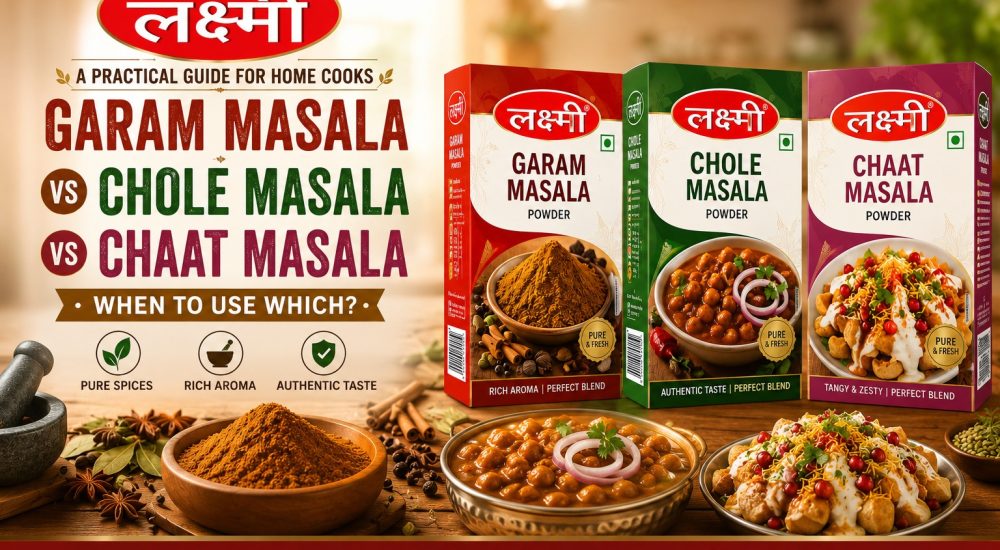

Most kitchens in India have all three of these garam masala, chole masala, and chaat masala sitting somewhere in the spice cabinet. And most cooks have, at some point, used the wrong one at the wrong time. It is an easy mistake. The tins look similar. The smell is vaguely familiar. You are in the middle of cooking and you grab what is closest. But each of these blends was made for a specific purpose, and using them correctly makes a noticeable difference in the final dish. This guide explains exactly what sets them apart and when each one belongs in your cooking.
Garam Masala
Garam masala powder is a blend of warm, dry-roasted whole spices — cardamom, cloves, cinnamon, black pepper, bay leaf, coriander, and cumin are the most common ones. The exact combination varies by region and by household. A Punjabi garam masala tastes different from a Bengali one. Both are genuine. The word garam means warm in Hindi. This is not about spicy heat it refers to the warming quality these spices carry, which is why garam masala is used in heavier, slow-cooked dishes rather than light, fresh ones.
When to add it
Right at the end last 30 seconds before the flame goes off. This is the one rule most people get wrong. Garam masala added too early loses its aroma completely. The fragrant oils in cardamom and cloves burn fast. Add it late, and those same oils bloom into the dish beautifully.
Where it works well
- Dal makhani and tadka dal a small pinch at the finish.
- Paneer-based gravies matar paneer, shahi paneer, butter paneer.
- Slow-cooked mutton or chicken curries.
- Rajma works alongside a proper rajma masala blend.
- Biryani added in layers with the rice, not the base.
- Most everyday sabzis and stuffed parathas.
Chole Masala
Chole masala is a purpose-built blend. It was designed for chickpeas and it does not work as a general substitute for other masalas. If you use it in a dal or a chicken curry, the flavour will clash with the dish rather than support it.
The reason is one key ingredient: anardana — dried pomegranate seeds. They give chole its characteristic tartness, a slight sourness at the back of the palate that balances the heaviness of chickpeas. Garam masala does not have anardana. That single difference changes everything.
When to add it
During cooking not at the end. Once your onions are golden and the tomatoes have fully cooked down into the oil, add the chole masala and let it fry for 3 to 4 minutes on medium heat. This step is important. It cooks out the raw edge of the spices and lets them absorb into the oil before the chickpeas go in.
Where it works well
- Punjabi chole the dish it was made for.
- Kala chana curry black chickpeas cooked the same way.
- Chole tikki chaat as the base gravy.
- Some cooks add a pinch to rajma for extra tang.
- Stuffed chole paratha filling.
Chaat Masala
Chaat masala works differently from the other two it is not a cooking spice at all. It is a finishing blend meant to be sprinkled after the dish is ready. Heat destroys the very things that make it worth using.
The flavour comes from two main ingredients: amchur (raw mango powder) for tartness, and kala namak (black salt) for that distinctive sulphurous note that no other spice replicates. Roasted cumin adds depth. Together, these give chaat masala its sharp, immediate flavour the kind that hits you on the first bite.
The rule is straightforward
Take the food off the heat. Plate it. Then add chaat masala. That order does not change. Cooking it even briefly collapses the sour notes and makes the black salt taste harsh.
Where it works well
- Aloo chaat, papdi chaat, dahi puri generous use.
- Bhel puri and sev puri.
- Samosas right out of the oil.
- Roasted makhana or papad as a snack.
- Cut fruit — mango, guava, pear, cucumber in summer.
- Raita a pinch changes the whole bowl.
- Lassi or fresh lime water.
- Some pickle and achar recipes use it as part of the spice mix.

At a Glance
A quick comparison of the three:
| Feature | Garam Masala | Chole Masala | Chaat Masala |
|---|---|---|---|
| Flavour | Warm, earthy, rounded | Tangy, bold, layered | Sharp, sour, salty |
| Add it | Last 30 seconds of cooking | Mid-way through cooking | After serving, never cooked |
| Key Ingredient | Cardamom & Cloves | Anardana (Dried Pomegranate) | Amchur & Kala Namak |
| Best Suited For | Curries, Dal, Rice Dishes | Chickpea and Lentil Dishes | Chaat, Snacks, Salads |
| Heat Level | Mild to Medium | Medium to Hot | Mild |
Four Mistakes Worth Avoiding
Cooking chaat masala
The most common one. Amchur and kala namak need to be tasted raw. Once exposed to heat, the sour notes turn sharp and unpleasant, and the black salt changes its character entirely.
Using garam masala in place of chole masala regularly
Fine once when you have nothing else. As a habit, your chole will always taste like a regular curry the anardana tartness simply cannot be replicated by anything in a standard garam masala.
Adding any masala powder too early
Garam masala needs to go in last. Chole masala needs a hot oil base to fry in not raw onions, not cold water. Both masalas lose their best qualities when the timing is off.
Buying blends with fillers
Flour, starch, and artificial colour are added to low-quality masala powders to increase volume and add visual appeal. They dilute the flavour noticeably. A simple test: open the packet and smell it. A well-made blend smells alive and complex. A poor one smells flat, or faintly chemical.
Other Spice Blends Worth Knowing
Rajma masala
Red kidney beans have a specific earthy sweetness that responds well to a targeted spice blend. A dedicated rajma masala balances coriander, cumin, and warmth in proportions that bring out the best in the bean. Worth having separately rather than improvising with garam masala each time.
Whole spices
For tadka, biryani, or masala chai whole spices give you cleaner, more direct flavour than any pre-ground blend. You control how much heat they get, they release oils freshly into the pan, and there is no staling. Cloves, green cardamom, cinnamon sticks, black pepper, star anise — buy these whole and grind only what you need.
Pickle masala
Homemade achar needs its own blend mustard, fenugreek, fennel, turmeric, and chilli in careful proportions. Garam masala and chaat masala both belong elsewhere. A proper pickle masala gives you the balance of heat, tang, and preservation that makes achar last and taste right.
Kali spices
Black cardamom, kali jeera (black cumin), and black pepper are used differently from their lighter counterparts. They add a smokier, more grounded note particularly effective in long-cooked dals, biryanis, and mutton dishes. Keep them separate and use them deliberately.
A Note on Quality
Spices lose potency faster than most people realise, especially once the packet is open and exposed to air and light. If your masalas have been sitting on the shelf for over a year, they are likely doing very little for your food — even if they still have some smell.
Laxmi Masala sources and packs each blend fresh, with no artificial colour, no added starch, and no compromises on the spice itself. The range covers everyday blends as well as whole spices for those who prefer to grind their own.
Laxmi Masala — Pure Spices. Real Flavour.
Garam Masala · Chole Masala · Chaat Masala · Rajma Masala · Pickle Masala · Whole Spices
Every blend is 100% natural — no fillers, no artificial colour, no shortcuts.
→ Shop Now at LaxmiMasala.com
Frequently Asked Questions
Can I use garam masala instead of chole masala?
In an emergency, yes. For regular cooking, no — you will not get the tartness that anardana provides, and your chole will taste like a generic curry rather than the real thing.
What is the difference between chaat masala and black salt?
Kala namak is one ingredient inside chaat masala. The blend typically has 8 to 10 spices, with amchur providing most of the sour flavour. They are not interchangeable.
Can chaat masala be used in cooked food?
It should not be. Heat changes amchur and kala namak in ways that are not pleasant. Always add it after the dish is off the heat and plated.
How long do these masalas stay fresh?
Stored in a sealed container, away from heat and direct light, most spice blends stay at full strength for 6 to 12 months. After that, they are safe but noticeably weaker.
What masala works best for rajma?
A dedicated rajma masala gives the most balanced result. You can add a small pinch of garam masala at the very end for warmth, but the base should be a blend made specifically for kidney beans.
In Summary
Garam masala goes in last, works in almost any curry or dal, and adds warmth and depth. Chole masala goes in during cooking, belongs in chickpea dishes, and gets its character from anardana. Chaat masala goes on after serving, never into a hot pan, and brings sharpness and tang to snacks and salads.
Knowing this does not make you a better cook on its own but using the right masala at the right time, consistently, is one of those small things that adds up to a real difference in how your food tastes.